

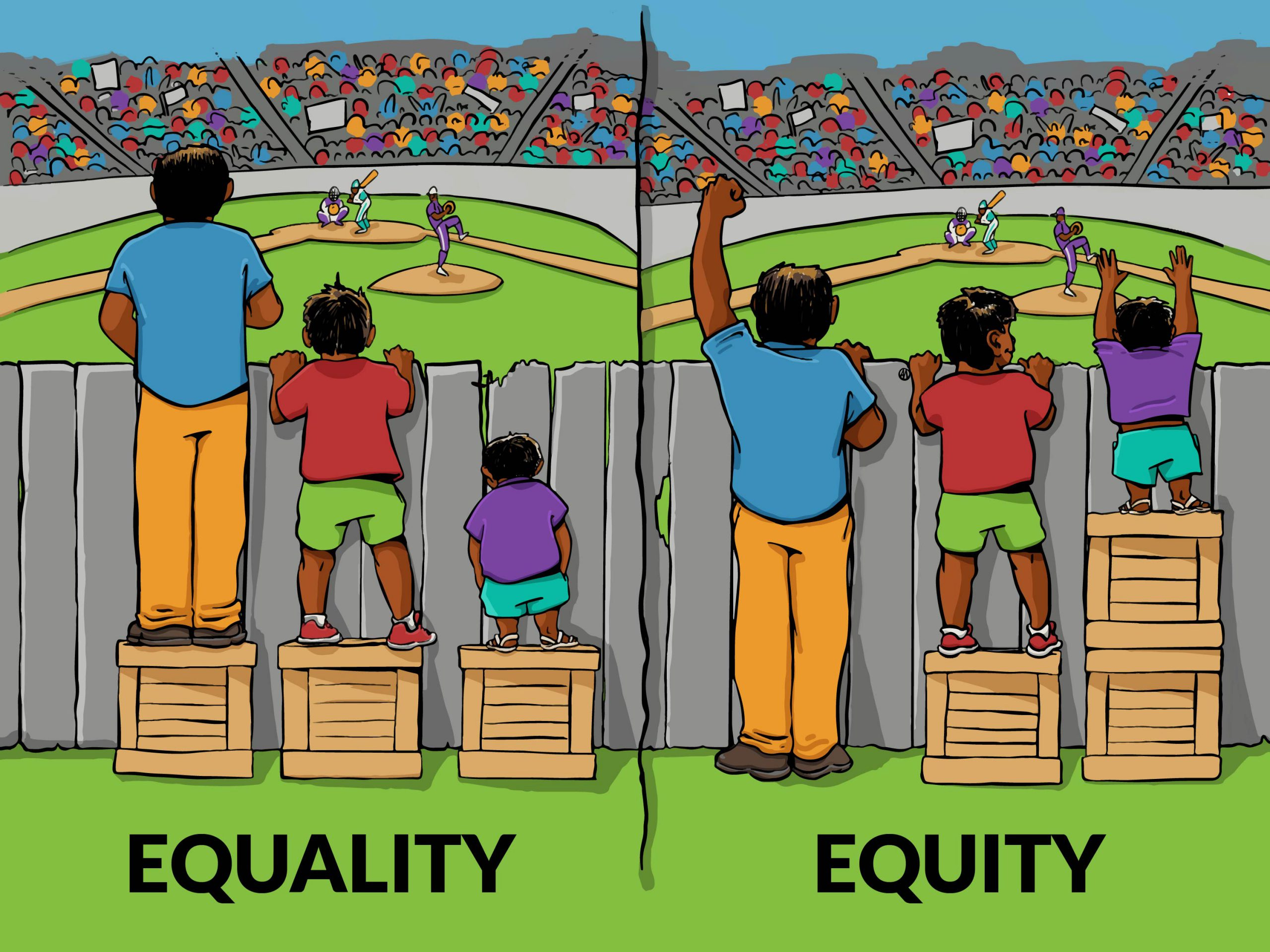
Jacob Savage’s long piece on “The Lost Generation” has been making the rounds for a week now. It feels like everybody has written a response, and here I am going to write my response.
If you’re among the few who hasn’t read Savage’s article, you probably should. In it, Savage addresses the aggressive enforcement of DEI hiring norms from the mid-2010s, particularly in what he calls the American “culture industry” – fields like journalism, screenwriting and academia. The upshot is that after around 2014 (a year Savage calls “the hinge”), radical demands for greater minority representation came at the cost, almost exclusively, of white male millennials. Members of this “lost generation,” with exceedingly few exceptions, found themselves systematically shut out of the careers they had trained for, while companies and institutions hired every last black female with a pulse they could find. Older, more established white males of the boomer and X generations enabled and presided over this system of racial exclusion, which affected them not at all.
This is recent history that I experienced first-hand. I got my first and only professorship in the early 2010s, just before the hammer came down. Of all the white men among my graduate school acquaintances, I’m the only one I know of who got a tenure-track job at all. Then, after I took up my appointment, I had the dubious pleasure of watching my university go crazy. After 2015, intense pressure from the administration and an increasingly powerful minority bloc within my own department made it all but impossible to hire white men, whatever the situation. In some cases merely interviewing a white guy was enough to risk veiled accusations of racism from the diversity enforcers. After I was nearly cancelled a few times, I decided that near-daily racial harassment wasn’t worth the salary. I abandoned my job and moved back to Germany, just a few years into the glorious American cultural revolution. I wasn’t getting paid nearly enough to recentre my professional life around the tiresome intellectual pretensions and imaginary racial grievances of undertalented, overpromoted angry black women.
Don’t let anyone tell you they didn’t know what was going on back then. Right now, many of the progressives who cheered this nonsense on at the time …
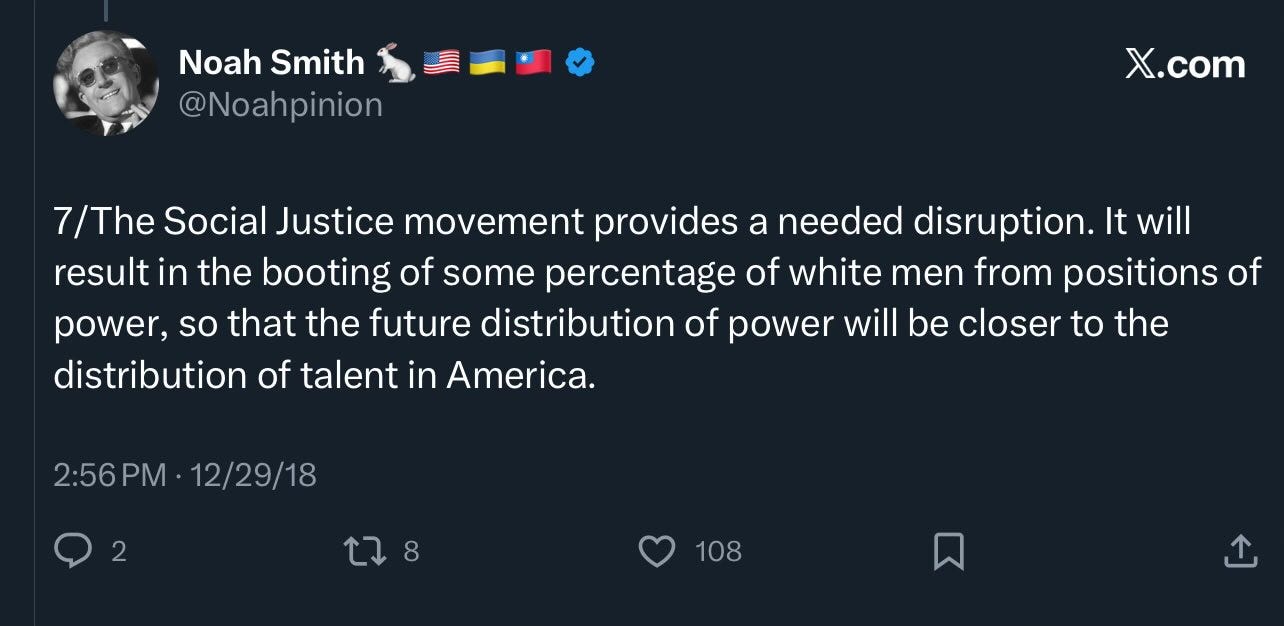
… are pretending that Savage’s article is the first they’ve heard about how brutally bad and exclusionary the DEI mavens made everything:
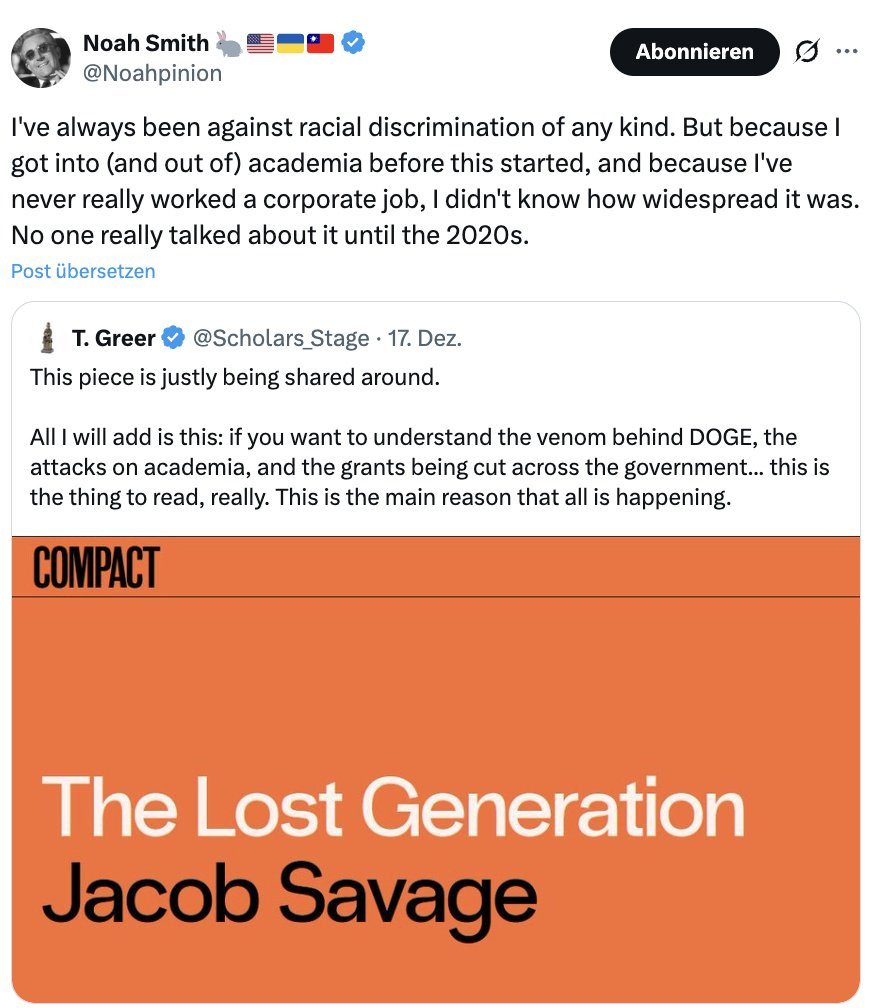
Aside from details of scale and timing, however, Savage’s report isn’t news to anyone who passed within a megaparsec of academia, journalism or television anytime in the past decade. Savage’s service is subtler, in that he’s helped move the DEI craziness that took off after 2015 into the sphere of consensus reality. Since his piece came out, those years of lunacy have become something that people can discuss, criticise and perhaps even repudiate, confident in the knowledge that what happened back then (and, to varying degrees, is still happening now) is on a shared cultural map. Naturally, Savage’s article operates from within the world of liberal egalitarian assumptions and devolves at the end into naive pleas about the importance of race- and gender-blind meritocracy. These faults make his material more palatable to the liberal masses and therefore more effective.
In case it wasn’t obvious, the hordes of (mostly gay and/or female) “minoritised” black and brown people taken into the junior ranks of American cultural institutions do not represent a groundswell of heretofore neglected talent. Fifteen years ago it was still common to hear that minoritoids were an untapped resource whose genius promised to raise our institutions to new heights, but by 2015 nobody dared talk like that anymore. Everyone had long since realised that insisting on meritocratic standards was a great way to fill your schools not with the modern-day descendants of slaves, but rather with a lot of white and Asian people. The unspeakable truth is that disadvantaged minorities are precisely and inexorably those whom any kind of meritoracy, however conceived, would tend to exclude. This makes a lot of good liberals so uncomfortable that they have spent decades inventing ever more elaborate bedtime stories explaining why their evil patriarchal ancestors are to blame for this state of affairs.
I witnessed several Minority Studies-style job searches from the inside. These were invariably positions designed to result in the hire of basically anybody but a straight white male candidate. Because politicised minorities all “specialise” in their own racial or gender identity, it is relatively easy to find them. Once the deans pass down the orders, you simply publish an ad for a Professor of African American Homosexuality and wait for the applications from black (mostly) women to trickle in. At this point, the politically naive discover that the applicant pool is anything but normal, and is in fact divided by a great gulf: At the top are maybe 8–12 minimally acceptable candidates you could conceive of hiring, all of whom turn out to be applying from comfortable tenure-track perches at places like Princeton. Also too, they all have a recent history of hopping about from school to school to optimise their professional situation. Beneath these elite applicants there lurks a vast mob of semi-literate incompetents who would be out of their league teaching high school. So, you try to hire some of the scarce in-demand blacks and hope that they stick around long enough to keep the deranged diversitards in the administration happy.
My school had the resources to hoover up a few minority trophies for our stable, but when searches got really hard, we could always escape by at least hiring a woman. Thus the racial egalitarians mostly failed to redress the historical injustices of colonialism and slavery, while succeeding handsomely 1) in tilting the gender imbalance of the humanities and social sciences even more steeply in the female direction, and also 2) in further enshittifying the post-secondary educational environment and 3) in contributing to the deeper political radicalisation of these already left-leaning institutions. Once you recognise that the very same trends were unfolding across Hollywood and the news media at the same time, you have an explanation for the political freakouts that began to plague American culture after Savage’s hinge year – especially the sex paranoia of the MeToo crusaders after 2017 and the Summer of Floyd in 2020. These events then radicalised campus politics still further: Because some fentanyl addict and convicted felon died in police custody, we needed more minorities, we needed more women, and we needed them right now.
As I said above, I lived in this whirlwind for about four years. One thing I learned, is that when you hire a lot of underselected politically trendy brown people, you actually dial up the racist optics by causing your brutally overselected white male faculty in contrast to shine all the brighter. Everything becomes racist in this environment. Tenure reviews, teaching evaluations, student preferences – all these things become racist because the designated racial antagonists do so comparatively well at them.
This basic paradox – whereby antiracist policies serve merely to magnify the more racist aspects of reality – was anything but new in 2015. I suspect the insanity that took off in that year was merely the distant echo of an earlier wave of diversity hiring initiatives from the 1990s. By then, these minoritoids were about 20 years into their careers and making their way into the upper rungs of the faculty and administration. Some of them landed in key decision-making roles, but even in the more numerous cases where the provosts and the deans of the faculty and the university presidents remained lamentably undiverse, the dangerous minoritoids were senior enough to pose a threat and demand an apologia for allegedly unearned privilege. The boomers and gen X’ers of Savage’s article saved their skins by sacrificing the next generation of white male academic hopefuls. That’s how they proved they weren’t racist.
Just because some centrist-trending progressives profess mild regret over this era today, and just because some DEI administrators have received new job titles, does not nearly mean that these practices are over with. Meritocracy, we must admit, is a weak position, and one that can never be fully realised – not least because ethnic preferences are intuitive, powerful and self-perpetuating. These people are now fully entrenched, and many of them will continue to agitate for special racial privileges until they retire.
I read the Savage article and found it a bit boring, simply because it stated the extreme obvious for 5000 words, and then delivered mega retarded conclusions simply to avoid stating the even more extreme obvious
John Carter wrote a very long essay which cut to the bone more directly. All I can say is the ship has sailed and the damage is long done. And all that is left is for the whole rotten edifice to come crashing down.
"Minoritoids" -- eugyppius, you certainly have a way with words. 😄