

An unstudied impression: Donald Trump is like a shark, in that he must always swim forward or risk suffocation. He, his administration and the media ecosystem that has grown up around Trump’s political persona depends upon action and controversy. In fallow news cycles, Trump steadily loses the initiative and two things happen: First, the media establishment and the leftist activist machine begin gathering their own critical momentum. Second, the vast MAGA-adjacent social media sphere must turn to other controversies to keep the clicks and the ad revenue flowing. Both of these work against the forty-seventh president and his purposes.
Since Trump’s initial barrage of executive orders has subsided, the media cycle has therefore lurched from one moment of hysteria and excitement to the next. Each new controversy totally eclipses the last. Hardly anybody remembers or talks about Nicolás Maduro any longer; the twin Minneapolis ICE shootings and associated protests, too, have faded. What were hailed as pivotal events which would finally discredit Trump’s programme this time look, in retrospect, like passing trivialities – not necessarily because they didn’t matter, but because sustained attention in this crazy messaging environment is impossible.
The Greenland uproar that preceded the 2026 World Economic Forum meeting in Davos, too, has passed. Unlike most of these other controversies, though, it cost me no few readers and also several friends, which I regret. I can’t speak in favour of American efforts to annex the territory of a neighbouring European country, and while I wouldn’t expect any of you to respect me at all were I to take the opposite position, not everybody sees things that way. Now that emotions are lower, I want to talk about Denmark and Greenland and NATO and defenceless leeching Europe and all those other issues. My thoughts on these matters are still scattered, so I’ll going to proceed by topic with obnoxious subheadings.
First, to summarise the half-remembered happenings of just a few weeks ago:
In mid-January, Danish Foreign Minister Lars Lokke Rasmussen met with U.S. Vice President J.D. Vance and Secretary of State Marco Rubio. They discussed Trump’s demands that Denmark allow the United States to assume sovereign control of Greenland, perhaps via some kind of sale. The meeting went poorly, with Rasmussen telling the press: “It’s clear that the president has this wish of conquering over Greenland.” Various European countries then sent a handful of soldiers to Greenland, whether to demonstrate “military solidarity” with Denmark, to show the Americans that indeed they take Greenland’s security seriously or because the exercise was already scheduled anyway. Passive-aggressive ambiguity is an important Eurocrat tactic. Trump responded by threatening to levy punitive tariffs against those countries that had taken part in this pointless weekend mission and again demanding that Denmark sell Greenland to the United States. The controversy came to a head at the annual World Economic Forum meeting in Davos, where Trump gave a characteristically memorable speech in which he ruled out military force to annex Greenland but again insisted that the island be ceded to the United States, for strictly strategic reasons:
What I’m asking for is a piece of ice, cold and poorly located, that can play a vital role in world peace and world protection. It’s a very small ask compared to what we have given them for many many decades. But the problem with NATO is that, we’ll be there for them 100%, but I’m not sure they’d be there for us.
There ensued an emergency meeting between Trump and NATO Secretary-General Mark Rutte, which according to the US President established the “framework of a future deal.” Rutte has suggested this as-yet unspecified deal might involve the United States gaining sovereignty over the existing Pituffik Space Base, but officially anyway neither Denmark nor semi-autonomous Greenland have assented to these or other terms. The whole matter is in hibernation now, de-escalated for the moment anyway.
Nevertheless, the episode has filled my mind with words, which I must now disgorge – words on Greenland Itself; on Encumbered Denmark; on Trump and NATO; on Trump and Europe; and on Leeching Europeans and the American Empire.
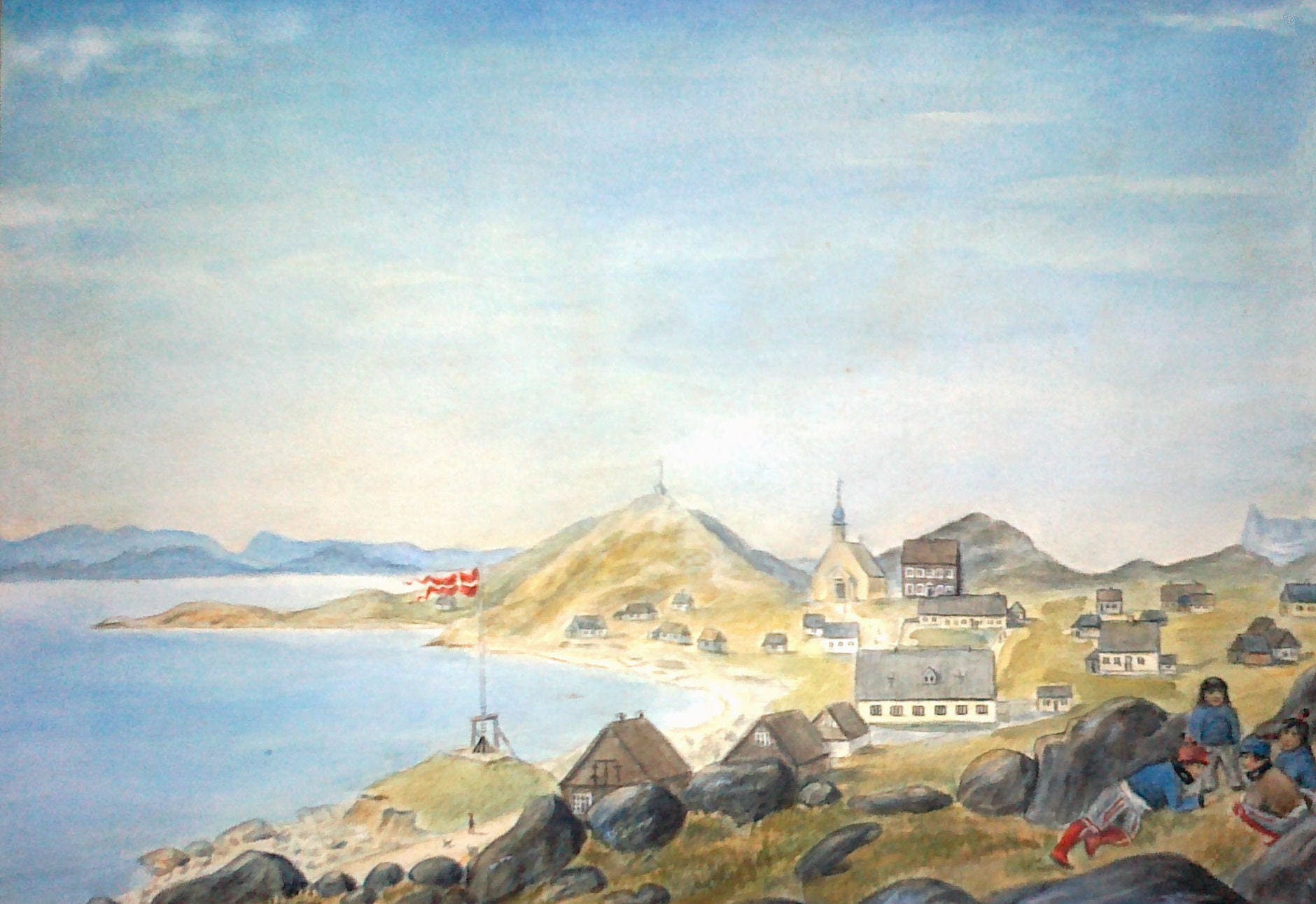
Greenland Itself: Trump has expressed an interest in buying Greenland since late in his first term. The island has strategic importance for the United States and it falls within the Western hemisphere, which explains why Trump is not the first American president who has had this idea. The U.S. effectively occupied Greenland during World War II to keep us Germans out of it, and they did not give it back to Denmark until they had established NATO and gotten the Danes to sign a treaty granting the Americans broad rights to establish bases and other defensive facilities there – provided only that the Danes agree. In practice, Denmark has always approved American requests within the framework of this treaty.
The strategic importance of Greenland faded after the Cold War, and both the Danes and the Americans drastically reduced their military presence on the island. Now that the era of unchallenged liberal hegemony is over, Greenland has reacquired its old strategic importance and its future depends a lot on American attitudes towards NATO. As long as the the United States maintains confidence in this 76 year-old alliance, the existing security framework will satisfy American strategic anxieties there. Should the Americans lose confidence in NATO or were the alliance to fall apart, the United States would surely annex Greenland. This is why Trump’s moments of NATO pessimism and his demands for Greenland seem to coincide, and it is why when Trump feels reassured about NATO (as after his emergency meeting with Rutte) he expresses his satisfaction with the status quo.
Denmark and Encumbered Europe: Denmark is among the best-governed countries in the European Union, but that does not mean the Danes can just do things. They are caught in the same general ideological and constitutional trap as the rest of us, and there is literally no way for them ever to sell Greenland to the United States. The political and constitutional hurdles are insurmountable, and their ideologically demanded post-colonial commitment to Greenland’s independence forbids it. Denmark would risk outright annexation before they could find a means of signing away Greenland. As a rule, all European states are profoundly encumbered like this. Were Denmark able to sell Greenland to the United States, and if they wished to, that would be fine, but they can’t because they’ve tied their own hands and this is the nature of the world we live in.
Trump and NATO: Much of Trump’s MAGA base remains firmly isolationist and demands that the United States abandon the NATO alliance. Trump himself knows this and he has periodically questioned the utility of NATO. Formally, however, Trump’s administration stands behind the alliance, as anyone can see from reading the 2026 National Defense Strategy and the 2025 National Security Strategy. Yes, Trump wants European countries to increase defence spending. Yes, he still hopes to complete a strategic pivot away from Europe towards China. And yes, in the longer term, he probably nurtures ambitions of reducing the importance of NATO in favour of separate bilateral agreements with various European states. Such arrangements would also provide a lever for present and future administrations to disrupt the various policies and initiatives of the European Union, which Trump clearly despises and which at least as presently constructed amounts to a suicide pact for all of us on the Continent. These populist pressures and future ambitions, together with a general distrust and legitimate scorn for Eurocrat elites, seem to be why NATO periodically fades from Trump’s favour, although never for very long. All of this is to say that I really don’t think Trump’s January bluster was a mere Art-of-the-Deal negotiating tactic, but a reflection of real tensions and contradictions within Trumpism.
Trump and Europe: Here again, we see two competing tendencies. Generally, the Trump administration has followed a sly strategy of pursuing ties with the more or less aligned and presently ascendant populist-right movements of Europe. The Trump administration has also defended our rights to free speech, particularly on social media; relentlessly attacked our insane energy transition; and criticised our elites for their failure (or refusal) to stop mass migration. The purpose of these efforts is to isolate the Eurotards by fertilising the hostile populism that is growing ominously just beneath their double chins. If you are wondering why Trump bothers with this, I refer you to my previous paragraph: Sympathetic governments in key European states, joined to the United States, would be a means of sidelining the European Union and remaking Atlanticism in Trump’s image.
Exactly how to help the populist right into power is a much harder nut to crack. Expressing overt support for parties like Alternative für Deutschland can hurt more than it helps, and the Americans don’t have more direct means of influencing domestic politics over here. At the very least, this a long-term project requiring tactics and strategies we have yet to explore, and probably some institutions we have yet to create.
What we saw during the Greenland fracas, was an abandonment of this tailored approach and a rhetorical turn against Europe in general. Trump, his administration and his social media allies at times hinted darkly about annexing Greenland outright and even accused Denmark of anticolonialist sins against the native Greenlanders.1 All of these spats have been smoothed over now, and I don’t want to be hyperbolic about the consequences, but this shift basically allowed all the worst Eurotards to posture as patriotic defenders of the European order while compelling the MAGA-aligned AfD to distance themselves from the Trumpist forcefield behind which they had sheltered.
In the end, the AfD slipped a few points in national polls and the CDU took the lead again. By way of consolation, the Pigeon Chancellor Friedrich Merz drew no direct benefit from the hullabaloo and finds himself now more unpopular than ever. Thus, while this brief hostile posturing from the American president benefited the fully Eurocratic CDU marginally, CDU politicians did not gain much of anything. A protracted episode, however, would work surely against the populist right more seriously. The AfD would be cast as a fifth-columnist pariah and energy for banning them would build. Also too, we’d have to deal with an unending deluge of Eurofed propagandists and AI abominations like this:
Whether Trump cares about this kind of thing is another question, but obviously I have to care about it.
Leeching Europeans and the American Empire: The standard MAGA-influencer line, elaborated partly from things Trump himself now and again says, holds that European countries have exploited the United States and the defensive umbrella it provides to shirk on defence spending and take six-week holidays in Mallorca every year – all while Americans work hard to fund this entire edifice that gives them nothing and does them no good.
This is not only uncharitable and overstated, it is also unflattering to the United States. The Americans fought in two European wars for the express purpose of winning an empire for themselves. Theirs is an informal empire, but it is an empire nonetheless, and it is anything but a charity operation. The deal is that the United States gets to run European foreign policy – generally for its own interests – while Euro rulers retain sovereignty in domestic affairs. The U.S. maintains influence in Europe in part by extending security guarantees to the Continent and stationing many soldiers here.
European states like Germany could fund their own defence entirely. It would hurt a little but we really could; despite all the catastrophic policies of the last 20 years we still have a large and highly advanced economy. The reason we don’t do that, is because nobody wants us to. The Federal Republic is forbidden by treaty from building its own nuclear arsenal, for example. Otherwise, were we to develop a totally independent military, our rulers would begin pursuing their own autonomous geopolitical strategy, which is something neither our neighbours nor the Americans want.
The primary benefit we draw from the American subordination and pacification of Europe is not so much savings on defence, but rather the geopolitical coordination that the NATO alliances provides to member states. Europe, being a continent rather than a country, mostly does not have coherent geopolitical interests and so it is very helpful when the Americans provide the playbook in this area. Over time, these arrangements have had unfortunate degenerative effects on European elite culture, causing our leaders to descend ever further into the depths of Eurotardation and to lose all sight of the fact that other countries also want things or that geopolitics are based on more than human rights and do-gooder humanitarianism.
Another point to note about the American empire is this: My American friends are subject to it every bit as much as we Europeans are. This is a massive geopolitical system steered by elites for their own purposes, and European leaders also collaborate in and benefit from this system. The American empire is governed by what Ben Rhodes once called the “foreign policy blob” – an agglomeration of permanent bureaucrats, key journalists and academics, politicians and others. The American president has a substantial role in influencing blob thought and policy, but he is not solely in charge and the blob also influences him. The blob remains adjacent to the Democratic Party and broadly hostile to Trump; and it is the blob, rather than the American president, that commands the loyalty of European politicians. Thus when Nord Stream was bombed at the very least with blob approval, the German Chancellor spent many weeks looking at his shoes and trying not to say anything, but when Trump made overtures to Greenland, the German Chancellor felt a little freer to speak his mind. If Trumpism persists much beyond 2028, the blob will gradually assume more Trumpist characteristics and European leaders will fall into line more completely with Trump’s prescriptions than they have until this point.
General MAGA hostility to the American empire is not unfounded or ridiculous, although it is important to recognise that even ordinary Americans derive direct benefits from empire, particularly in the form of enhanced purchasing power that comes from holding the world’s reserve currency. Because the American presence in Europe for structural reasons has caused a degeneration and artificially boosted the global system of political vandalism known as the international left, I think it would be good for the Americans to leave and for the Europeans to have their own history, but as of now neither American nor European elites want that. Not even the Trump administration wants that.
This was a startling illustration of the tendencies and perhaps the real purpose of anticolonialist ideology, which emerged after the war and worked to undermine European colonies – thus making way for a newly burgeoning American hegemony. Alas, before long, this anticolonialist ideological system came to be read back onto the United States, emphasising guilt for slavery and requiring overeducated university retards to open every last academic talk with a cringe land acknowledgment.
But how did this “ fracas “ start?
Greenland has dilapidated airports. Greenland asked Denmark to fix them up
Denmark said they they did not have the money to fix the airports.
Red China said they would fix them up and put a little base there.
Denmark found the money.
Trump, seeing a distressed property, offered to take Greenland off Denmark’s hands.
Denmark was insulted.
Trump was ridiculed and said that the USA did not want Greenland under Chinese influence.
Trump claimed it was a security issue.
Had Obama or FJB made the same offer, they would be hailed as forward-looking.
statesmen.
Greenland cannot be under Russian or Chinese control.
Here we are. The issue is what happens going forward.
It's called seizing the initiative, which is important in all areas of human endeavor.
As far as Europe is concerned, I and many Americans have lost a great deal of respect for the lands that our forefathers emigrated from. Western Europe, especially, seems to be filled with what Kurt Schlichter just called impotent euro-eunuchs, whose great-grandfathers once conquered the world, but who now cannot be bothered to either breed or defend their inheritance from people who do nothing but breed and take other people‘s inheritance.
I mean, kiss your future Auf Wiedersehen.